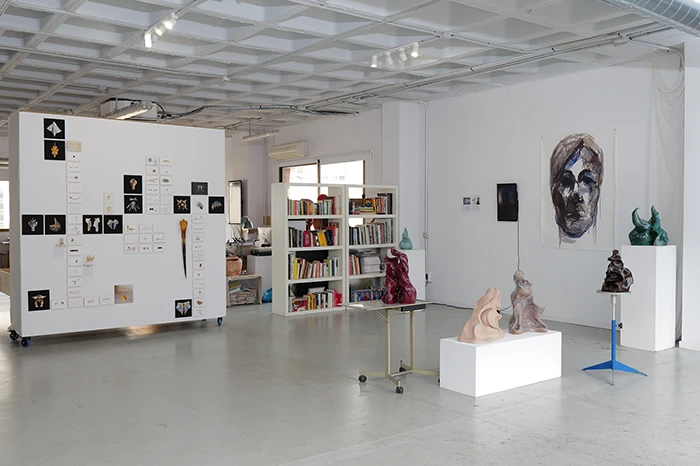
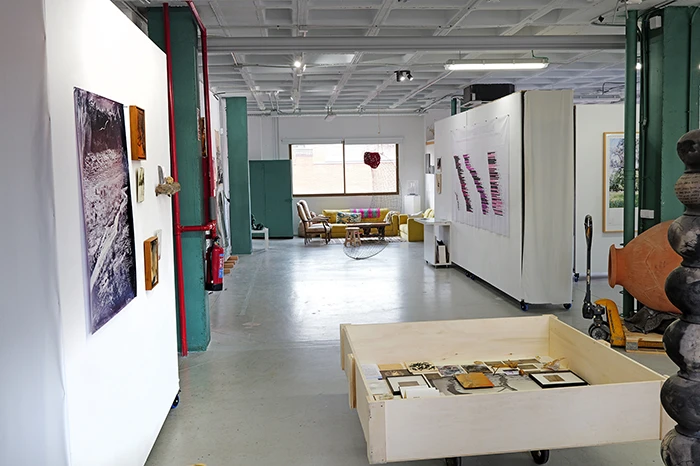
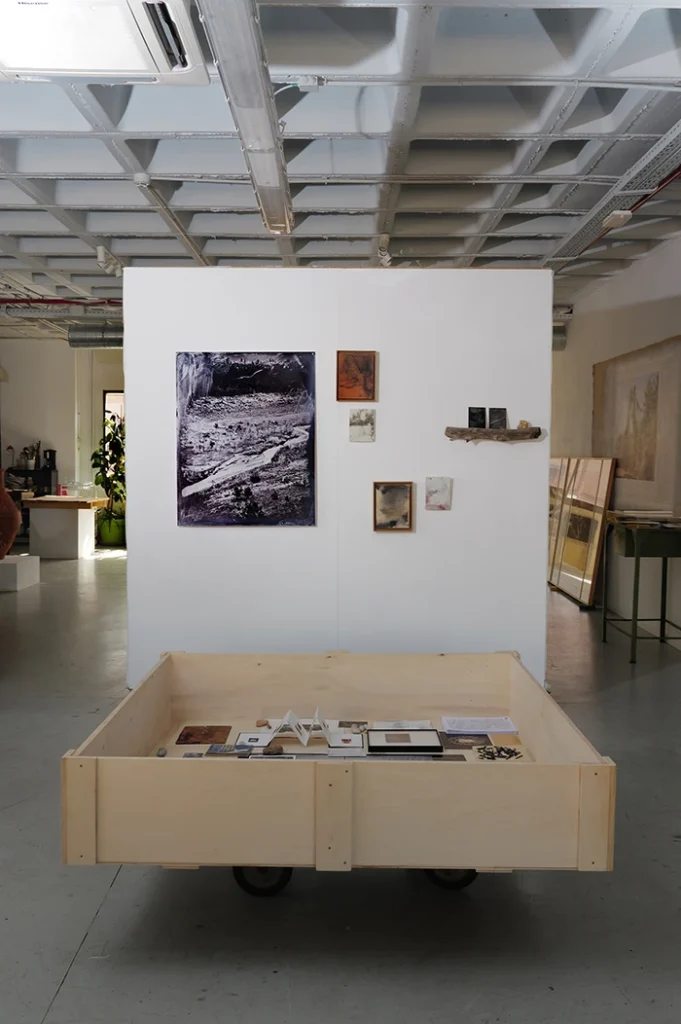
La Tercera Nave is a workspace for multidisciplinary contemporary artists, located in an industrial loft on the third floor of a culturally emblematic building, with a long-standing tradition of artists’ studios in the heart of the avant-garde neighborhood of Carabanchel.
The space brings together creation studios alongside an exhibition area where exhibitions, artist talks, and workshops open to the public take place. It also features an analog photography lab, and all resident artists engage with photographic imagery in their practice, either as a primary medium or in dialogue with others.
La Tercera Nave is conceived as an environment for production, research, and exchange, fostering interaction among artists and professionals in the field. We actively encourage visits from collectors, curators, gallerists, cultural agents, as well as groups from museums, universities, and anyone interested in contemporary art.
More than just a collection of studios, it is a dynamic community that promotes critical thinking, experimentation, and the dissemination of new artistic practices.
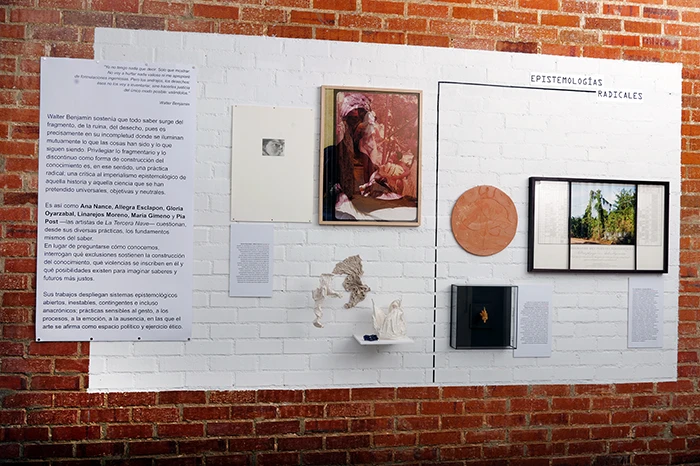
radical epistemologies
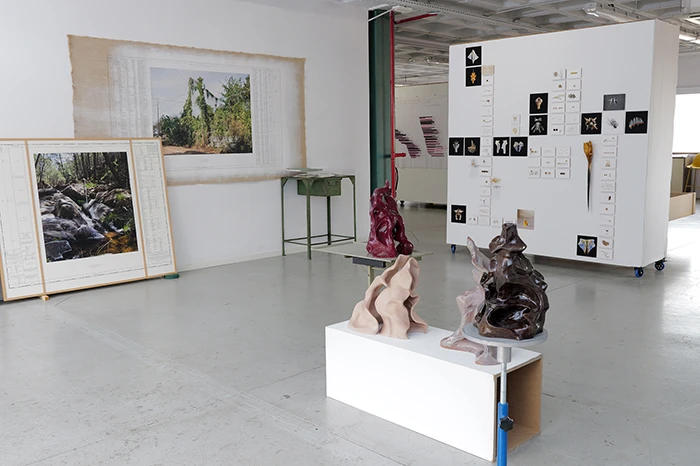
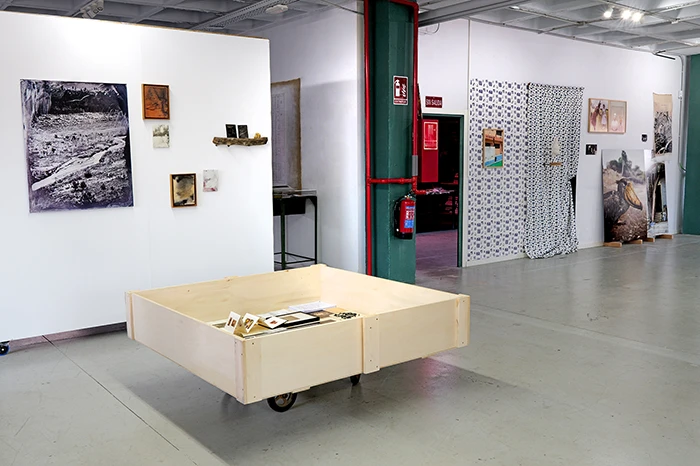
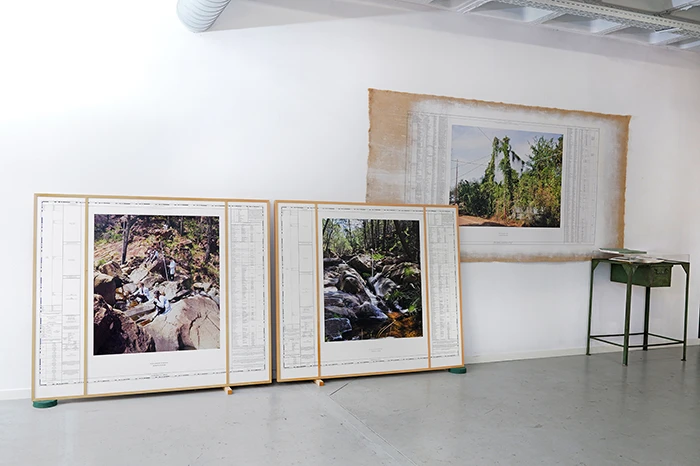
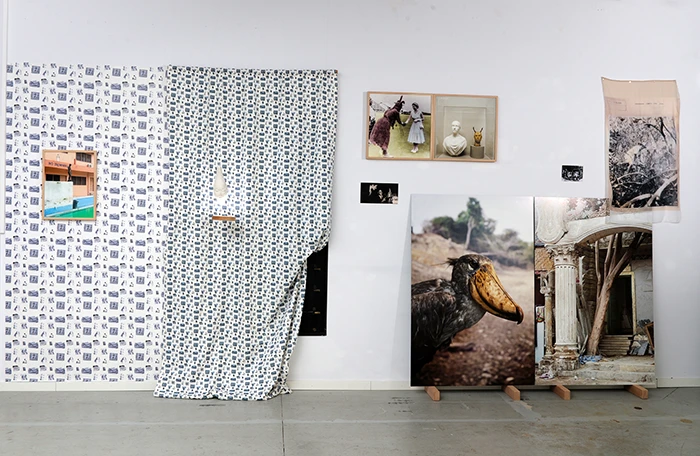
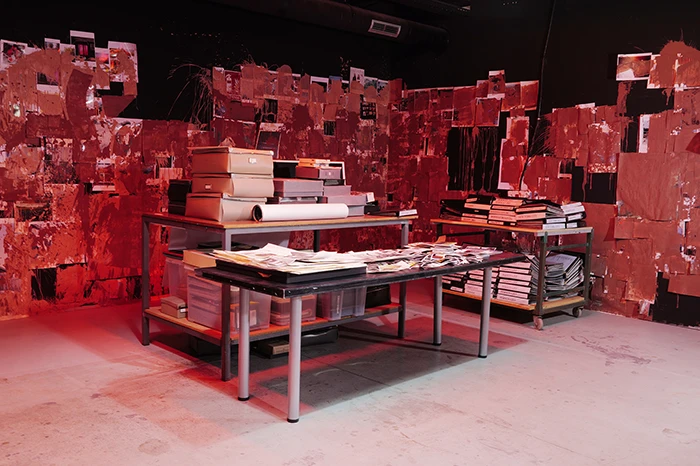
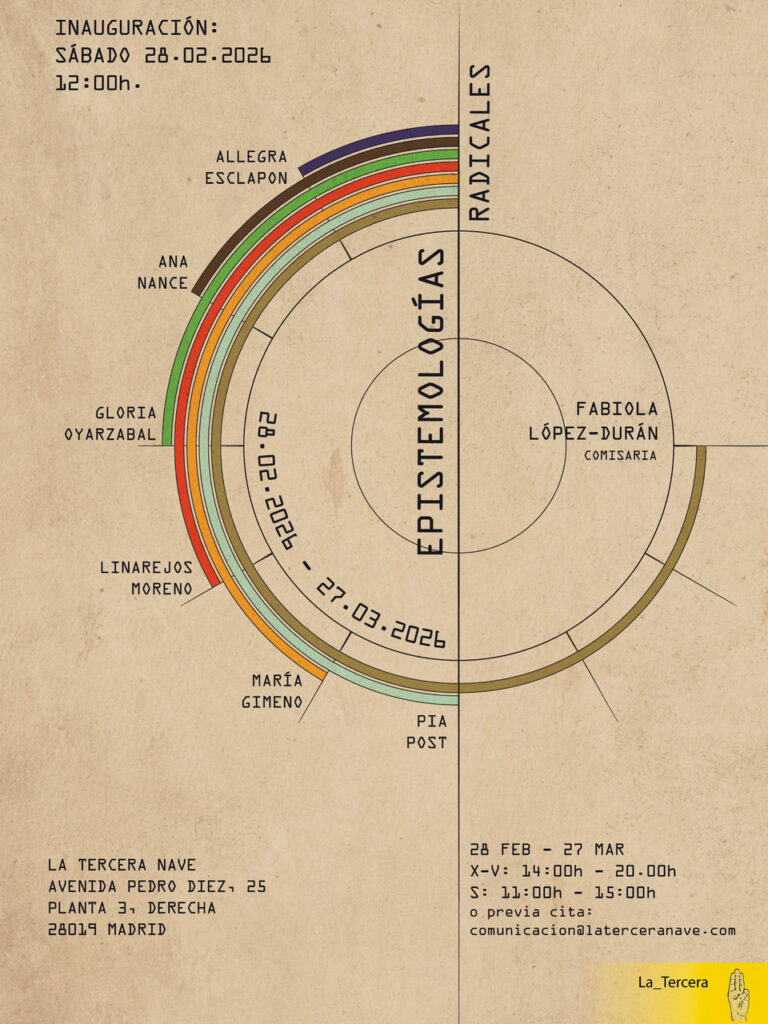
Currently, La Tercera Nave hosts the group exhibition Radical epistemologies, installed both in the exhibition space and throughout the building’s corridors. The show brings together all the resident artists, who have developed site-specific installations under the curatorial guidance of Fabiola López Durán, proposing a journey that articulates different critical approaches to image and knowledge.
Beyond the exhibition, La Tercera Nave’s main activity centers on its working studios, conceived as spaces of active production where artists develop their creative processes on a daily basis. The environment fosters the exchange of ideas, methodologies, and techniques, encouraging experimentation and collective learning.
The space is defined by its commitment to openness and dialogue, generating encounters, workshops, and public activities that seek to connect with diverse audiences and expand access to contemporary artistic practice.
“I have nothing to say. Only to show.
I will purloin no valuables, appropriate no ingenious formulations.
But the rags, the refuse—these I will not inventory but allow,
in the only way possible, to come into their own:
by making use of them.”
Walter Benjamin
Walter Benjamin argued that all knowledge arises from the fragment, the ruin, the discarded, for it is precisely in their incompleteness that what things have been and what they continue to be illuminate one another. To privilege the fragmentary and the discontinuous as a mode of constructing knowledge is, in this sense, a radical practice; a critique of the epistemological imperialism of that history and that science which have claimed to be universal, objective, and neutral.
It is in this way that Ana Nance, Allegra Esclapon, Gloria Oyarzabal, Linarejos Moreno, María Gimeno y Pia Post —the artists of La Tercera Nave— question, through their diverse practices, the very foundations of knowledge. Rather than asking how we know, they interrogate which exclusions sustain the construction of knowledge, what violences are inscribed within it, and what possibilities exist for imagining more just forms of knowledge and more just futures.
Their works unfold open, unstable, contingent, and even anachronistic epistemological systems; practices sensitive to gesture, to processes, to emotion, to absence, in which art asserts itself as a political space and an ethical exercise.
Gloria Oyarzabal and María Gimeno take on the challenge of reconfiguring what constitutes history. For them, it is not a matter of filling gaps within already established hegemonic structures, but of rejecting the temporality that condemns the violence of those gaps to an irreparable and obsolete past. In doing so, María reveals what we have internalized almost without noticing: the systematic violence of patriarchy that has rendered women’s artistic production invisible across centuries in museums, archives, universities, and in the books through which art history continues to be taught. Her work lays the foundations for a more inclusive, critical, and plural history. Gloria, for her part, invites us to recognize and unlearn the imperial modes of thought underlying our institutions, which have enabled the extraction, classification, and appropriation of the cultural and symbolic production of peoples from the Global South, while distancing the communities that generated them and destroying the worlds those objects embody.
For Ana Nance and Linarejos Moreno, knowledge is constructed from territory and archive, and through the juxtaposition of heterogeneous cognitive processes: from scientific and infographic methodologies to ancestral practices and oral traditions—collective and empirical—capable of transmitting intangible cultural heritage. Ana enters the territory of her ancestors as a field of both material and symbolic research: she gathers history in its forgettings and fragments, models its earth as an archive, and transforms it into intimate records of existence. At the same time, she juxtaposes landscape and personal territory with episodes of conflict, pleasure, resistance, and culture recorded in her own archives of the world, thus configuring a visual device in which memory, experience, and spatiality critically converge. Linarejos, by contrast, questions the supposed objectivity and precision of classificatory geographies and infographics: from the phytogeographies of Alexander von Humboldt—conceived to represent the geographic distribution of plant species in the Americas—to mathematical formulas for calculating the age of trees or grids used to map the expansion of the livestock industry. Like scientific annotations inscribed into the landscape, her research produces a form of knowledge that opposes the extractivist logics of capitalism and the structures of labor exploitation, racial segregation, and environmental injustice that sustain it.
Through careful observation of diversity, complexity, and nature’s extraordinary capacity for transformation, Allegra Esclapon and Pia Post produce alternative economies of knowledge that displace hegemonic regimes of value and production. Allegra’s sculptures condense gesture, chance, and movement—of bodies and processes—configuring themselves as material archives of change and transformation. They are constructions that embrace contingency as a constitutive principle and inscribe, within their own materiality, the dialogue between matter and action. Pia, for her part, rescues waste, seeds, and “useless plants”—those typically eradicated from fields and gardens, that cling to clothing, that inconvenience and are discarded—replanting them within a field of meaning that subverts hierarchies between the valuable and the residual. Pia admires them, cleans and cares for them with meticulous attention, recomposes them, and in the process allows their beauty and complexity to emerge, articulating hybrid compositions that challenge the anthropocentric vision of the natural world and open the way toward more sensitive and reciprocal forms of ecological coexistence.
Within the work of these six artists there exists a profound commitment to that which resists and survives, an innovative cognitive stance that disrupts the apparent continuity of time and history, revealing hidden structures and invisible trajectories, and looking toward the future with renewed breath through their reparative labor upon fractured worlds.
Fabiola López-Durán